Introduction to Computer Vision
What is Digital Images?
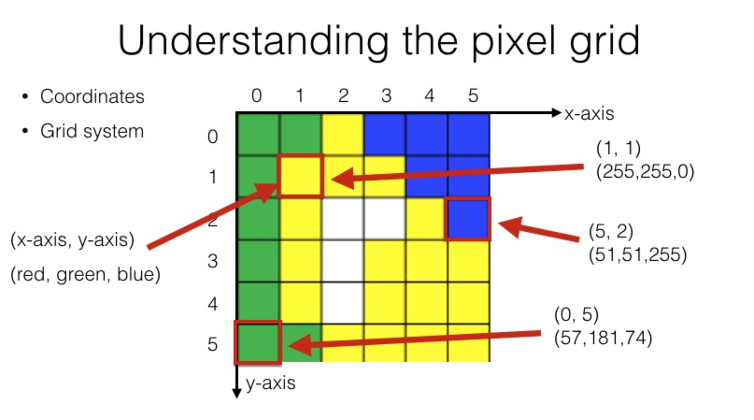
👉 An image is a collection of finite locations or points.
👉 Each location is called a "pixel."
👉 A digital image is a representation of a two-dimensional image as a finite set of digital values, called pixels or picture elements.
What is Pixel?
👉 Pixels are the smallest units in an image.
👉 Each pixel contains a color value.
👉 They come together to create the whole picture.
1. What is Computer Vision?
👉 Computer vision seeks to extract meaning from images.
👉 The goal isn’t to change how the image looks but to understand what the image represents.
👉 This involves identifying objects, interpreting scenes, and even recognizing patterns and behaviors within the image.
👉 It’s more about comprehension rather than alteration.
Three main use-case of Computer Vision
- Classification
- Detection
- Segmentation
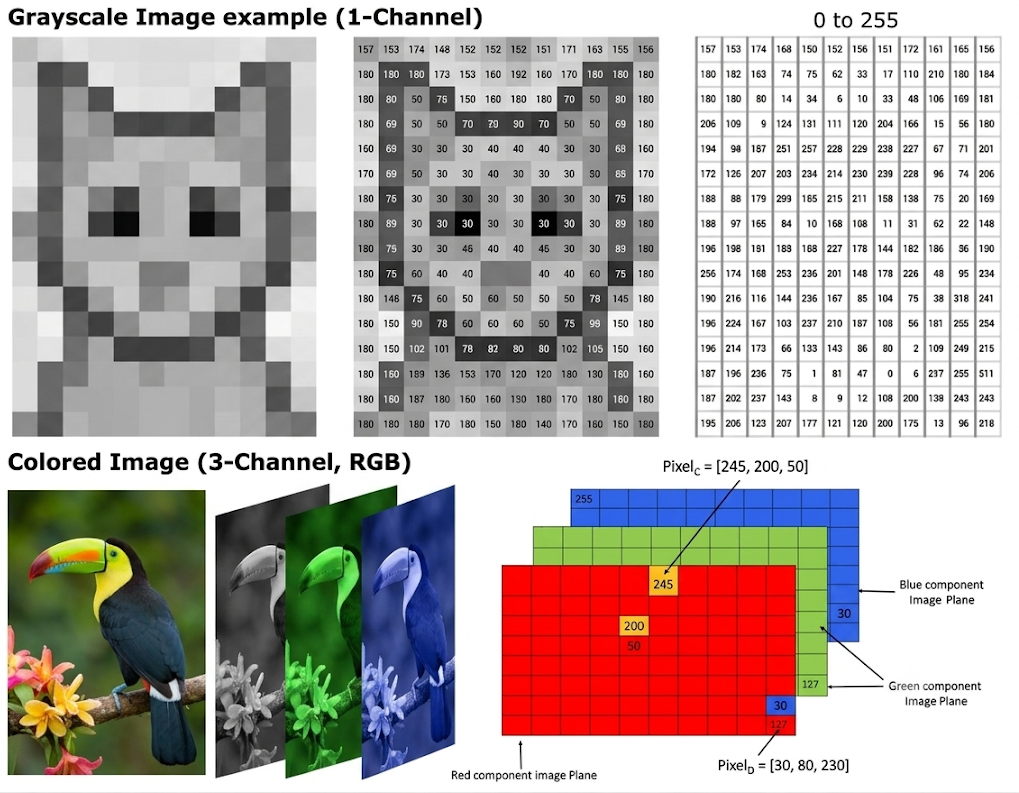
How is an image represented digitally?
2. Challenges in Computer vision
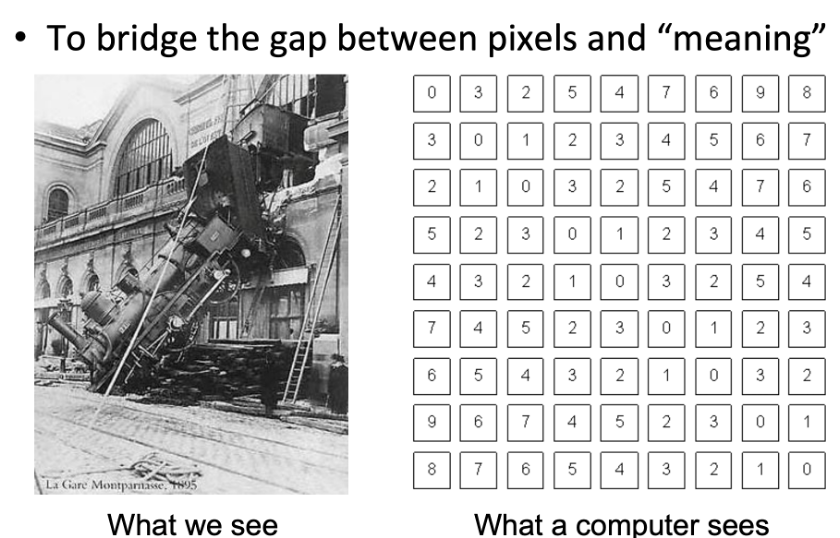
- Humans see a building, train wreck
- Computer sees just a set of numbers
- Making sense of the concept of building, train, wreckage etc from numbers is difficult
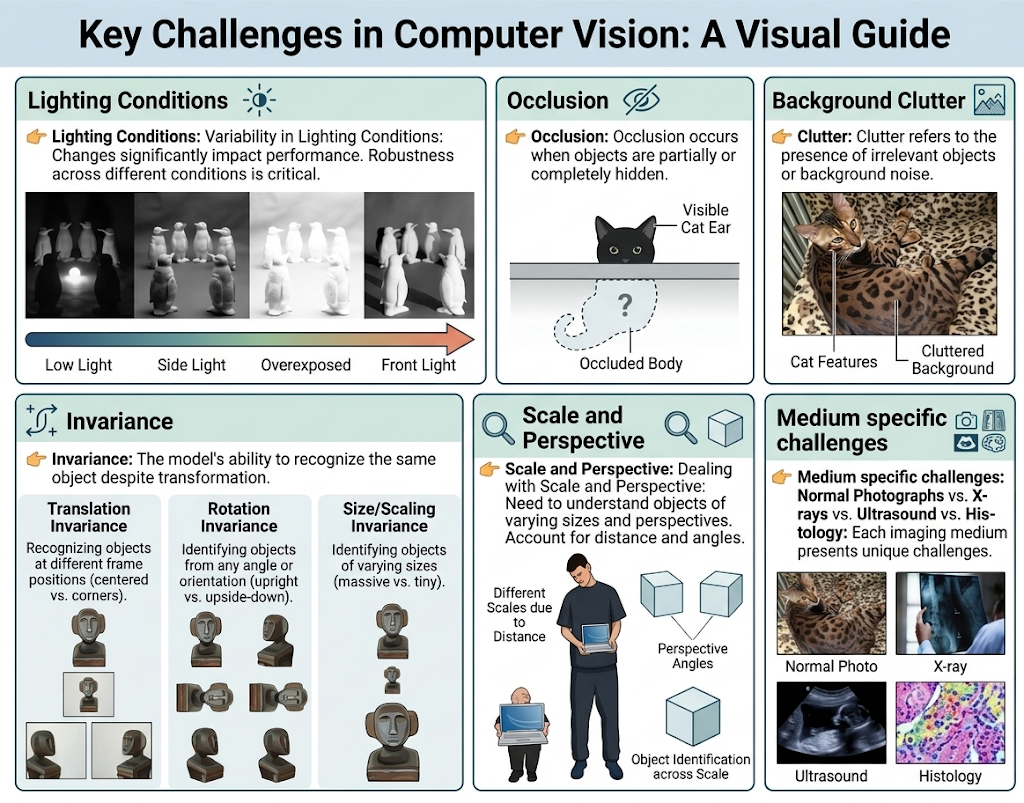
1. Lighting Conditions
Variations in lighting conditions can significantly impact the performance
- It must be robust enough to handle different lighting conditions to ensure accurate results
2. Occlusion:
Occlusion occurs when objects are partially or completely hidden
3. Clutter
Clutter refers to the presence of irrelevant objects or background noise
4. Scale and Perspective
Dealing with Scale and Perspective:
- Need to understand objects of varying sizes and perspectives
- Account for differences in distance and angles
5. Medium specific challenges
Normal Photographs vs. X-rays vs. Ultrasound vs. Histology: Each imaging medium presents unique challenges.
6. Invariance
- Scaling: Correctly identifying an object whether it is massive (taking up the whole screen) or tiny (far away in the background).
- Rotation: Identifying an object regardless of its viewing angle or orientation (e.g., an upside-down car, a tilted face).
- Translation: Recognizing an object regardless of where it is located in the frame (e.g., top-left corner versus dead center).
All the above Challenge's Visual representation